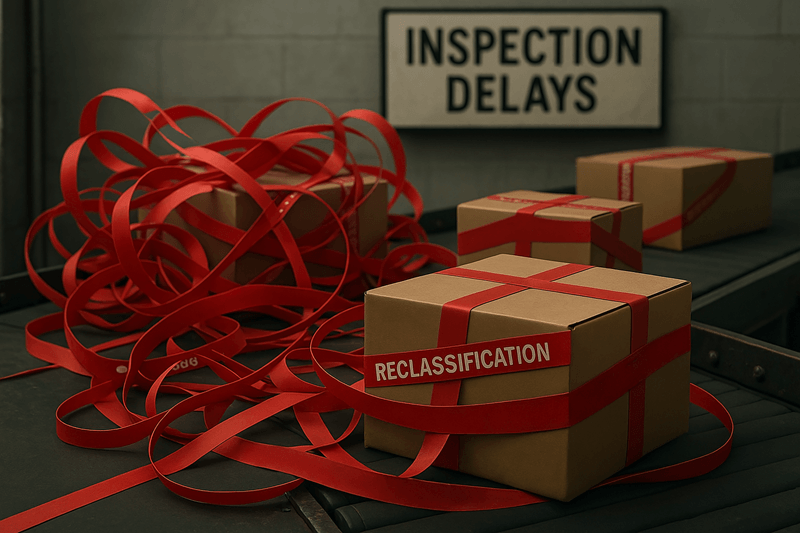
Why HS Codes Must Be Right Before Your Shipment Leaves
Before a shipment ever departs, one critical detail determines how it will move through Customs: its classification.
HS (Harmonized System) codes are not just a regulatory requirement—they directly impact duties, documentation, and clearance timelines.
If classification is incorrect before departure, the consequences don’t show up later—they begin immediately.
What Is an HS Code?
An HS code is an internationally standardized system used to classify traded goods.
It determines:
- Applicable duties and taxes
- Regulatory requirements
- How goods are reviewed by Customs authorities
In the United States, HS codes are extended into HTS (Harmonized Tariff Schedule) codes, which provide even more specificity for imports.
Why Classification Must Happen Before Departure
Classification is often misunderstood as a step that can be finalized at arrival.
In reality, it must be confirmed before your shipment moves.
When HS codes are not properly assigned in advance:
- Commercial invoices may be inconsistent
- Documentation may not align across parties
- Compliance risks increase before the shipment reaches port
By the time goods arrive, correcting classification becomes more complex—and more costly.
The Real Cost of Getting It Wrong
One incorrect HS/HTS code can lead to:
- Overpayment or underpayment of duties
- Customs holds and inspections
- Reclassification penalties
- Delays that impact delivery timelines and customer commitments
In many cases, these issues result in thousands of dollars in unexpected costs—before cargo is even released.
Where Classification Errors Typically Happen
Most classification issues are not intentional—they stem from assumptions.
Common sources of error include:
- Reusing outdated or previously assigned codes
- Relying solely on supplier-provided classifications
- Using overly broad or vague product descriptions
- Failing to align classification with actual product use or composition
These gaps often go unnoticed until Customs reviews the shipment.
Best Practices for Accurate Classification
To reduce risk and ensure smooth movement:
- Review product specifications in detail
- Validate HS/HTS codes against current regulations
- Ensure consistency across all documentation
- Confirm classification before shipment departure
- Work with experienced Customs and compliance professionals
Why It Matters to Your Supply Chain
Accurate classification isn’t just about compliance—it’s about predictability.
When classification is correct:
- Costs are known in advance
- Shipments move without unnecessary delays
- Operations remain consistent and reliable
When it’s wrong, the entire supply chain absorbs the impact.
How LOGISTEED Supports Classification Accuracy
At LOGISTEED America, our Customs Brokerage and compliance teams work with importers to:
- Review and validate HS/HTS classifications
- Align documentation across all shipment records
- Identify risks before cargo moves
- Support compliance with U.S. import regulations
👉 Learn more about our Customs Brokerage services