

What The Tariffs Mean Right Now!
Updated Monthly
Last updated: March 4, 2026
Global trade policy continues to shift rapidly. This resource center provides a running timeline of major trade developments affecting U.S. importers, along with practical resources to help companies navigate tariff changes and compliance requirements.
- March 4: Administration signals potential increase to temporary global tariff under Section 122 while evaluating longer term tariff authorities.
- February 26: U.S. International Trade Commission launches investigation into the economic impact of revoking China’s Permanent Normal Trade Relations status.
- February 24: U.S. Customs and Border Protection confirms it will cease collection of tariffs imposed under the International Emergency Economic Powers Act (IEEPA).
- February 20: U.S. Supreme Court rules the International Emergency Economic Powers Act does not grant authority to impose tariffs, invalidating multiple tariff actions implemented in 2025.
- February 6: Presidential proclamation modifies duties tied to Russian Federation sanctions and terminates the additional 25% tariff previously imposed on certain imports from India effective February 7, 2026.
- February 6: Administration authorizes additional tariff free quota access for imported lean beef to address domestic supply shortages
- January 29: Presidential action addressing trade and economic restrictions involving the Government of Cuba takes effect, superseding inconsistent prior actions.
- January 14: Presidential proclamation imposes tariffs on certain semiconductor products and semiconductor manufacturing equipment imports to protect national security and domestic technology supply chains.
- January 14: Presidential proclamation adjusts imports of processed critical minerals and their derivative products under Section 232 due to national security concerns related to supply chain dependency.
2025
- December 31: Presidential action amends prior tariff measures affecting timber, lumber, and derivative wood products as part of ongoing national security trade actions.
- December 29: United States implements updates to the United States–Israel agreement on trade in agricultural products, modifying tariff provisions for certain agricultural imports.
- November 20: Presidential action modifies the scope of tariffs imposed on certain imports from Brazil following earlier trade enforcement actions.
- November 14: Administration modifies reciprocal tariff measures by exempting certain agricultural products from duties imposed under the April 2025 reciprocal tariff program.
- November 4: Reciprocal tariff rates on imports from China are modified following trade negotiations and adjustments to the bilateral economic arrangement.
- November 4: Duties addressing the synthetic opioid supply chain involving imports from China are modified to adjust tariff scope and enforcement measures.
- October 21: President Trump said Xi Jinping wants to discuss China’s 157% tariff rate, while trade experts expect limited progress from the upcoming Seoul summit and continued brinkmanship on both sides.
- October 20: President Trump confirmed plans to increase tariffs on Colombian goods while signaling interest in limited Argentine beef imports to reduce U.S. food prices.
- October 14: President Trump softened his 100% tariff threat against China as both sides exchanged statements over Beijing’s new rare earth export controls, hinting at potential de-escalation ahead of renewed talks.
- October 14: AstraZeneca reached a deal with the Trump administration delaying Section 232 tariffs for three years in exchange for discounted drug pricing and $50 billion in U.S. investment commitments.
- October 14: China imposed new port fees on U.S.-linked ships and sanctioned five Hanwha Marine subsidiaries in response to the U.S. Section 301 investigation.
- October 6: CBP said refunds (drawback, protests, PSCs) won’t be paid during the shutdown, but essential cargo processing and revenue functions continue with some delays.
- October 6: – Brazil pressed the U.S. to roll back 40% tariffs during a call between Presidents Lula and Trump, signaling potential trade talks ahead.
- September 30: Section 232 tariffs will hit timber, lumber, and wooden furniture on Oct. 14, with sharp escalations on furniture imports set for early 2026.
- September 30: China signals readiness to bar U.S.-flagged ships and impose counter-fees in response to U.S. port charges on Chinese-built vessels.
- September 22: A bipartisan House bill seeks to repeal coffee tariffs, citing rising consumer costs and Congress’s constitutional authority over trade policy.
- September 22: The White House unveiled new Section 232 inclusion processes and confirmed a 15% tariff baseline on Japanese imports, a move that could reshape auto and manufacturing supply chains across North America.
- September 10: EU Leader Stands by U.S. Trade Deal. Von der Leyen defended the trade pact as necessary for stability and jobs, but insisted Europe will set its own digital and environmental regulations.
- September 10: Trump and Modi Signal Progress in Trade Talks. Both leaders voiced optimism about U.S.-India negotiations, though over half of Indian exports remain subject to dual tariffs tied to Russian oil
- September 9: The Supreme Court will hear consolidated challenges to President Trump’s IEEPA tariffs on an expedited basis, with arguments set for early November.
- September 8: The Sept. 5 executive order carved out minerals, generic medicines, and select materials from reciprocal tariffs, while leaving future reductions dependent on trade partner negotiations.
- August 25: CBP published subheadings for Indian goods facing an additional 25% tariff effective August 27, doubling duties alongside the reciprocal tariff
- August 25: The White House confirmed wooden furniture is included in the lumber Section 232 investigation, narrowing scope but leaving timing unclear.
- August 25: Trump said the U.S.–South Korea trade deal is now complete, locking in a 15% tariff on Korean imports and zero tariffs on U.S. goods.
- August 19: Lutnick said written details on U.S. trade deals with Japan and South Korea could be released within weeks, reducing auto tariffs and funding U.S. industry.
- August 11: President Trump signed an executive order delaying the 125% reciprocal tariff on Chinese goods until November, offering short-term relief while trade talks continue.
- August 11: President Trump confirmed gold will be exempt from tariffs despite a CBP ruling suggesting otherwise, with an executive order planned to formalize the clarification.
- August 8: The U.S.-Japan agreement will set a flat 15% reciprocal tariff for goods at or below that MFN rate, remove stacking errors on items like beef, and issue refunds, through auto tariff timelines remain undecided.
- August 4: CBP issued official HTS codes and exemptions for Brazilian imports subject to a new 40% duty starting August 6, clarifying that goods already in transit may be exempt if entered before October 5.
- August 1-4: USTR Greer said some tariff deals are finalized but may be rejected by President Trump, and confirmed that reciprical tariffs on over 70 countries will rise August 7, pushing U.S. average rates to a historic 18.3%
- July 31: U.S. reciprocal tariff rates are further modified, with duties ranging from 15% to 41% based on trade deficits, effective August 7, 2025
- July 31: The duty on Canadadian products increases from 25% to 35%, effective August 1, 2025, due to concerns over illicit drug trafficking
- July 31: The tariff increase on Mexican goods is avoided, with current terms extened for 90 days as the U.S. and Mexico work on a long-term trade agreement
- July 30: U.S. declares a national emergency over actions by Brazil; imposes a 50% tariff on specified Brazilian imports under the IEEPA
- July 30: White house issues proclamation under Section 232 imposing a 50% tariff on semi-finished copper imports, effective August 1, 2025; refined copper may face additional duties of 15% in 2027 and 30% in 2028, pending Commerce Department review by June 30, 2026
- July 30: Executive Order suspends global duty-free “de minimis” exemption (under $800), effective August 29, 2025; postal shipments will initially incur flat-rate duties($80-200), shifting to standard ad valorem tariffs after six months
- July 29: U.S. and EU announce historic trade deal with a 15% tariff ceiling on most EU goods and major investment commitments, effective August1.
- July 23: U.S. – Japan Strategic Trade & Investment Agreement announced.
- July 22: U.S. – Indonesia deal sets mutual tariff rate at 19%
- July 7: Reciprocal tariffs raised to 50% (UK exempt)
- June 4: Steel & Aluminum tariffs raised to 50% (UK exempt)
- May 2: De minimis exemption for China/HK removed
- April 5: “Liberation Day” 10% baseline tariff in effect
SOURCE: https://www.whitehouse.gov/news/
Updated Monthly (PENDING UPDATE – March 4, 2026)

See How Tariffs Impact Your Shipments
Want to Know EXACTLY Which Tariffs are Impacting Your Business?
Your TrakIt dashboard includes the latest trade data, personalized to your shipments. You don’t have to guess. You can know.
Customers can login below. Don’t have an account but want to learn how you can get indepth insights? Request a demo below!
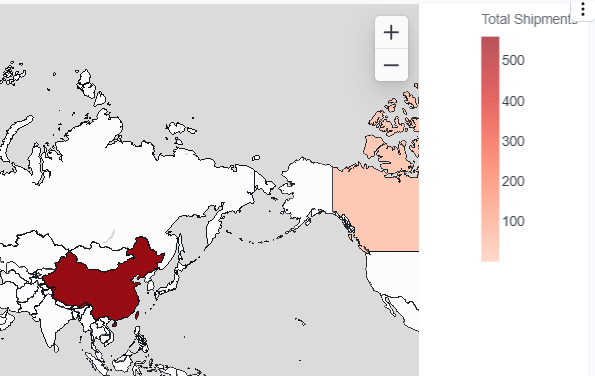
Already Using TrakIt?
Explore your personalized tariff impact dashboard. Your shipment-level exposure, costs, and mitigation tools are waiting.
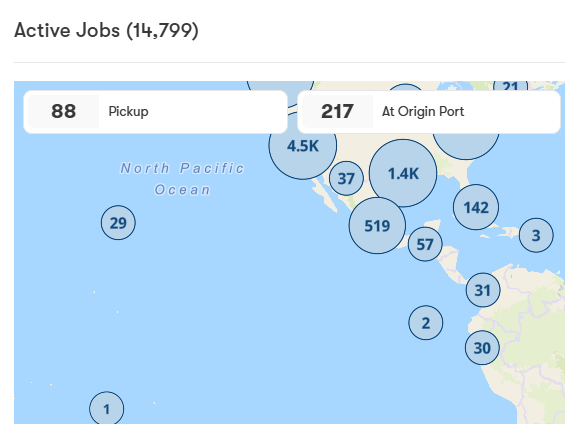
Not Using TrakIt Yet?
Want to see what Trakit can do for your team? TrakIt helps importers and exporters:
- See tariff exposure
- Monitor landed cost fluctuation
- Predict and mitigate risks
- Make smarter decisions
Get the Latest News Directly To Your Inbox!
LOGISTEED America sends out weekly Newsletters updating you about what is happening in the logistics world and what could be affecting your cargo! Stay up to date with the latest by signing up for our newsletter.
See this week’s Industry Newsletter
See the latest Customer Advisory
Resource Page FAQs
A. We post updates every week, with urgent news shared as needed. Bookmark this page and check back regularly. Subscribe to our Industry Newsletter to receive updates directly to your inbox.
A. Please reach out to your LOGISTEED account representative or contact your local LOGISTEED America branch to talk with a customs brokerage expert.
A. We are actively helping clients identify possible alternate routing options and discussing ongoing strategies to help them build their businesses, your success, is our success. Let’s talk strategy.
Need Help Now?
We’re here to support you. Contact your representative today.
Downloadable Resources
Need more details? Download our quick resources below.
- Get to know LOGISTEED America with our company one-pager
- LOGISTEED America ACE ACH PMS Overview Flyer
- LOGISTEED America ACH Overview Flyer
- LOGISTEED America PMS Overview Flyer
DISCLAIMER
The information provided on this page is for general informational purposes only and is provided as a convenience to our customers. While LOGISTEED America strives to ensure the accuracy and timeliness of the content, we make no guarantees, representations, or warranties, express or implied, as to the completeness, reliability, or accuracy of the information.
LOGISTEED America shall not be held liable for any errors or omissions, or for any loss or damage resulting from reliance on this information. Users are strongly encouraged to consult with legal counsel, trade attorneys, or professional compliance consultants before making any decisions that may affect their business operations.